

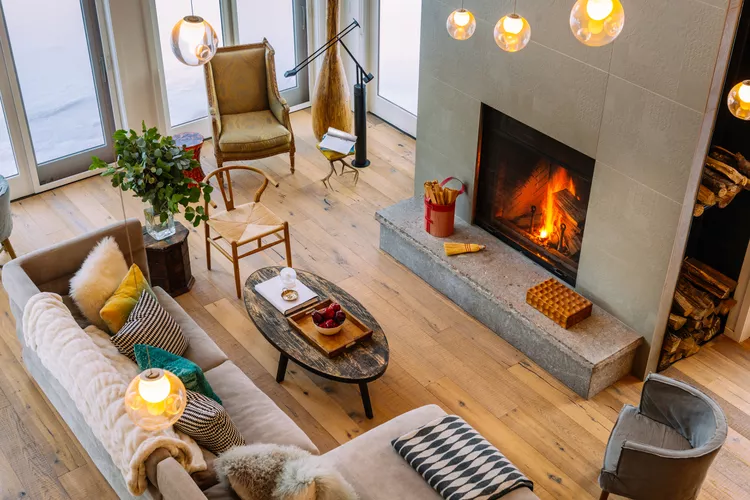
A great surround can rescue a tired room faster than a new sofa ever will. You can paint walls, swap rugs, and fuss over cushions for weeks, but when the fireplace looks dated, the whole space keeps whispering the wrong decade. That is why fireplace surround ideas matter more than most homeowners expect. They do not just frame a firebox; they set the visual rules for the entire room.
You feel that effect the second you walk in. A chunky stone surround makes the room feel rooted and calm. A slim plaster frame sharpens everything around it. A dark marble border adds drama without begging for attention. The surround is the handshake of the room, and first impressions stick.
If you are building, remodeling, or simply trying to stop your living room from looking half-finished, this is the place to get serious about material, scale, and style. I have seen beautiful rooms fall flat because the surround was treated like trim work. Big mistake. Choose with intention, and your fireplace stops being background architecture and starts acting like the anchor it was meant to be.
Why Fireplace Surround Ideas Deserve More Than a Passing Thought
Most people start with color or furniture because those choices feel safer. The surround gets left for later, almost like a technical detail. Then the room stalls. You cannot quite figure out why the layout feels off or why the mantel styling never looks polished. The answer often sits right in front of you: the surround is sending a mixed message, and the rest of the room is forced to negotiate with it.
The surround sets the mood before decor gets a chance
A surround establishes tone long before accessories enter the scene. That is why a white oak mantel on a rough ledgestone surround creates one emotional response, while honed black marble under the same art creates a completely different one. You are not only choosing a finish. You are choosing whether the room feels relaxed, formal, quiet, or bold.
Scale plays the same trick. A narrow surround with crisp edges can make a room feel taller and tidier, especially in homes with lower ceilings. A wider frame, particularly one with substantial legs and a deeper shelf, gives the room gravity. In older houses, that extra presence can feel right. In a small new-build, it can feel like the fireplace swallowed the wall.
That is why copying a showroom display rarely works. What looks rich in a large retail vignette can feel clumsy in your actual living room. A surround has to respond to the room you have, not the fantasy set built to sell tile. Rooms remember proportion, even when you do not consciously notice it.
Material choice changes the room’s personality
Materials speak fast, and they never mumble. Marble says polish. Brick says history. Plaster says restraint. Wood says warmth. Stone says permanence. When people talk about elegant interiors, they often focus on furniture silhouettes or lighting, but the surround material usually does more heavy lifting than either one.
Take limestone, for example. It has a softness that calms a space without making it dull. In one family room, a pale limestone surround can make moody wall paint feel intentional rather than gloomy. Marble works differently. It pulls in light, reflects detail, and adds a sharper edge. The room suddenly looks dressed.
Texture matters just as much as color. A smooth slab surround gives you a cleaner, more tailored finish. Split-face stone adds movement and shadow, but it can also crowd a room if everything else already has a strong texture. The best choice is rarely the flashiest one. It is the one that lets the room breathe while still holding authority.
Good design starts with what the room needs, not what trends say
Trends are useful right up until they bully you into bad decisions. You might love the look of a thick rustic beam mantel online, but if your room already has heavy ceiling beams and dark floors, that extra weight can make the space feel sleepy. Style should not be pasted on. It should answer a problem.
Sometimes that problem is blandness. A plain builder-grade fireplace in a new home often needs a surround with shape and contrast. Sometimes the problem is clutter. In a room with bold wallpaper, patterned upholstery, and a busy rug, the best move may be a plain plaster surround that quietly restores order. Restraint can be the smartest flex in the room.
Before you choose anything, ask one blunt question: what is this room missing? Character, softness, drama, lightness, history, calm? The right surround fills that gap. The wrong one creates a second problem and expects the rest of the room to clean it up. That never ends well.
Materials That Earn Their Place in the Real World
Once you understand the surround’s job, material choice stops being cosmetic and starts becoming practical design. Looks matter, yes, but so do heat tolerance, maintenance, budget, and the way a finish ages after you have lived with it for five winters. Pretty on day one is easy. Pretty after real use is the harder test.
Marble and stone for polish that lasts
Natural stone earns its reputation because it carries presence without needing much decoration. A marble surround can look formal, but it does not have to feel stiff. Veined white marble with simple lines gives a room brightness and refinement. Deep green or black marble brings mood and tension in a good way, especially when paired with soft textiles.
Limestone and travertine offer a quieter kind of luxury. They are less glossy, less dramatic, and often more forgiving in family spaces. I like them when the goal is warmth with discipline. They feel old-world without becoming theatrical. That balance is hard to fake, and cheaper imitations usually tell on themselves within minutes.
Stone also rewards you over time. Tiny marks, subtle weathering, and softened edges can make the surround feel more believable, not less. That is one reason old European interiors still look so convincing. Their materials did not try to stay frozen in showroom perfection. They aged with a little dignity, which is more than can be said for many trendy finishes.
Brick and tile when character matters more than polish
Brick has a stubborn charm, and I mean that as praise. It brings memory into a room. Even new brick surrounds can feel grounded if the color is right and the mortar lines are not shouting for attention. Limewashed brick, in particular, gives you texture without visual heaviness. It reads lived-in, not neglected.
Tile offers more control. You can go crisp and architectural with stacked vertical tile, or you can lean into craft with handmade zellige that catches light unevenly. The trick is not overdoing shape, color, and texture all at once. If the tile is bold, keep the profile simple. If the form is ornate, the tile should calm down.
In one remodel I admired, the homeowner wrapped a plain gas fireplace in warm off-white handmade tile and paired it with a slim oak mantel. That was it. No fussy trim, no carved details, no oversized mirror. The result felt fresh and expensive because every choice showed restraint. Character rarely comes from piling on. It comes from knowing when to stop.
Plaster, wood, and mixed materials for a tailored finish
Plaster surrounds have become more popular for good reason. They clean up a room fast. Their smooth finish works beautifully in homes that lean modern, Mediterranean, or quietly traditional. They also hide visual noise. If your room already has strong flooring, layered textiles, and a large window wall, a plaster surround can restore balance without looking sterile.
Wood, when used thoughtfully, adds human warmth. I am not talking about orange lacquered mantels that look trapped in another era. I mean natural oak, walnut, or painted wood details that frame the firebox with intention. Wood alone is usually best for the mantel or top trim, not the full heat-sensitive surround area, unless the design and clearances are handled properly.
Mixed materials often produce the smartest result because they give each element one job. Stone can provide substance, plaster can smooth the profile, and wood can soften the transition to the rest of the room. That layered approach feels custom because it is doing more than one thing at once. Good rooms are rarely built on a single note.
Style Directions That Actually Work in Elegant Homes
Style gets messy when people chase labels instead of visual logic. Modern, classic, rustic, transitional—fine, those terms help. But the better question is how the surround makes the room behave. Does it quiet the space? Sharpen it? Add weight? Invite softness? Once you think that way, style becomes clearer and far less performative.
Minimal surrounds make a room feel smarter
A minimal surround is not boring when the proportions are right. In fact, it often feels more expensive because it does not rely on ornament to prove itself. Clean legs, a restrained mantel shelf, and a carefully chosen material can make the whole wall look calmer and more deliberate. That calm reads as confidence.
This approach works especially well in homes where the fireplace wall shares attention with shelving, art, or large windows. You do not need the surround to scream for attention. You need it to hold the center without creating a fight. A slim plaster surround or a slab stone frame can do that beautifully.
The counterintuitive part is this: minimal design is less forgiving, not more. Every line shows. Every uneven seam becomes obvious. Every proportion matters. So if you choose simplicity, choose it all the way. Do not under-design the surround and hope styling will rescue it later. It will not.
Traditional profiles still win when they are edited
Traditional surrounds survive because they understand ceremony. A fireplace should have a little formality to it, even in a casual home. The problem comes when traditional details become bloated—thick corbels, busy carvings, fussy moldings, too many layers. Then the surround stops looking classic and starts looking tired.
Edited traditional design keeps the bones and loses the noise. Think tapered legs, modest molding, balanced overhangs, and materials that feel honest. A painted wood mantel over a stone or tile surround can still feel deeply current when the profile is disciplined. That is the sweet spot for many homes that want timelessness without museum energy.
This is where elegant interiors usually separate themselves from merely expensive rooms. The best ones do not announce every detail. They let shape, shadow, and proportion do the talking. A traditional surround with restraint can make the whole house feel steadier, as though the design knows exactly who it is.
Rustic and organic looks need discipline to stay refined
Rustic style gets abused more than almost any other design language. Too much rough wood, too much stacked stone, too much faux-aged everything, and the room starts feeling like a themed restaurant. Real rustic beauty comes from contrast. You need something smooth near something rough, something quiet near something weathered.
A reclaimed beam mantel can be wonderful. Pair it with a clean firebox surround and a simple hearth, and it feels grounded. Wrap the whole wall in aggressive stone and add distressed decor on top, and the room gets loud. Rustic charm depends on tension, not sameness.
Organic style works best when it feels effortless, though it rarely is. Soft-toned plaster, handmade tile, pale stone, and natural wood can create a room that feels relaxed yet elevated. The key is precision. Even casual-looking rooms need careful editing. Otherwise, the fireplace becomes mushy instead of memorable.
The Details That Separate a Pretty Surround From a Great One
This is the part many people skip, and it is exactly where the result gets won or lost. A decent material in the wrong scale looks wrong. A beautiful surround with poor styling feels unfinished. A solid design with bad installation can cheapen the whole room. Details are not decoration. They are proof.
Proportion, height, and mantel depth decide everything
A surround should relate to the ceiling height, the firebox opening, and the wall width. Ignore those relationships and even premium materials can look awkward. A short, squat surround under a tall ceiling feels apologetic. A giant mantel shelf on a narrow wall looks top-heavy. Rooms notice imbalance immediately.
Mantel depth matters more than people think. Too shallow, and it feels flimsy. Too deep, and it crowds the wall while collecting random objects you never meant to display. I usually prefer a depth that allows purposeful styling without turning the fireplace into a storage ledge. The mantel is a stage, not a shelf in the garage.
Height is another common stumble. Hang art too high above the mantel and the fireplace loses connection to it. Build the surround too low and the whole feature feels stunted. The goal is visual conversation between elements. Each part should support the next, not drift away from it like strangers at a party.
Styling the surround without drowning it in stuff
A good surround does not need much help. That is the first rule. When people are unsure about the design, they start layering mirrors, candlesticks, vases, stacks of books, seasonal branches, and whatever else the home store convinced them to buy. Suddenly the fireplace disappears under a pile of panic.
Keep the styling edited and intentional. One strong artwork can be enough. A mirror can work, but only if it serves the room instead of doubling clutter. A pair of objects can bring balance, though perfect symmetry is not the only path. I often like one tall piece and one lower, weightier object for a looser, more lived-in look.
You also need negative space. That empty area is not wasted. It is what lets the eye register the shape of the surround itself. For more inspiration on refined room composition, design ideas from PR Network can help you think beyond the mantel and see how the full space should connect.
Renovation choices that save money and regret later
Not every great surround requires a gut renovation. Sometimes you can skim-coat brick, swap a dated mantel, retile the facing, or extend the surround higher up the wall for a stronger presence. Cosmetic upgrades, when well planned, can shift the entire room without blowing up your budget. Small moves can carry real force.
That said, cheap shortcuts usually reveal themselves quickly. Peel-and-stick finishes near heat zones, flimsy trim, or badly matched faux stone may look passable in a phone photo, but they rarely survive close living. This is one place where doing less is often smarter than doing something fake. A plain painted surround beats a pretend-luxury one every day of the week.
If you are hiring help, push for proper mockups and scaled drawings. Ask to see how the profile meets the wall, where the mantel lands, and how the hearth aligns with flooring. Those boring questions save expensive mistakes. Design regret is rarely dramatic in the moment. It just sits there, slightly irritating you, year after year.
Conclusion
A fireplace surround is never just trim around a firebox. It is the room’s point of view made visible. When it is handled well, the entire space sharpens: furniture feels more settled, lighting feels more intentional, and even simple styling looks considered. That is the quiet power behind strong fireplace surround ideas. They do not merely decorate a wall; they teach the room how to hold itself.
The smartest choice is not always the grandest one. Sometimes it is pale plaster in a busy room, a disciplined marble profile in a modern home, or a softened brick surround that gives a new space some memory. What matters is fit, proportion, and honesty. The surround should solve the room you actually live in, not perform for a trend cycle that will fade by next year.
So take a harder look at your fireplace before you buy another chair, repaint another wall, or crowd another mantel with objects it never asked for. Choose materials with staying power, shape them with restraint, and let the surround lead. Then act on it. Sketch options, gather samples, and commit to a design that gives your room the backbone it has been missing.
FAQ 1: What is the best material for a fireplace surround in a busy family room?
Stone and tile usually win in busy family rooms because they handle wear, heat, and daily mess without acting precious. Choose a finish with subtle texture and forgiving color variation. You want durability, easy cleaning, and enough visual weight to anchor everything nearby.
FAQ 2: Are marble fireplace surrounds hard to maintain over time?
Marble needs respect, not fear. Seal it properly, wipe spills quickly, and avoid harsh cleaners that dull the surface. It can etch or mark, but many homeowners end up loving that softness. The patina often makes the surround feel richer, calmer, and lived-in.
FAQ 3: How do I choose a fireplace surround style that matches my home?
Start with your home’s bones, not a trend board. Look at ceiling height, trim, flooring, and window style. Then choose a surround that supports those features. The right style feels connected to the house, while the wrong one always looks pasted on.
FAQ 4: Can I update a fireplace surround without a full renovation?
Yes, and it often makes more sense than starting from scratch. You can repaint brick, replace the mantel, skim-coat old surfaces, retile the facing, or add cleaner trim details. Thoughtful updates change the room dramatically without forcing a complete rebuild.
FAQ 5: What size should a fireplace mantel be for balanced proportions?
The mantel should relate to the firebox opening, ceiling height, and wall width. Too thin looks timid. Too deep feels clumsy. Aim for enough projection to style lightly without crowding the room. Balanced proportion always beats oversized drama or undersized caution.
FAQ 6: Do modern fireplace surrounds work in traditional homes?
They can, if the transition feels intentional. A cleaner surround can freshen a traditional home when you keep some architectural connection through color, scale, or material. Contrast works beautifully when it feels controlled. Random contrast, though, just reads like indecision to everyone.
FAQ 7: How high should artwork hang above a fireplace surround?
Artwork should feel tied to the mantel, not float off on its own. Leave enough breathing room for both pieces to register, but keep them visually connected. In most rooms, lower than people expect works better and makes the fireplace wall feel grounded.
FAQ 8: What makes a fireplace surround look expensive without overspending?
Good proportion, honest materials, and restraint create a high-end look faster than flashy details. A simple surround with clean lines and one beautiful finish often beats a fussy design chasing luxury. Spend where your eye lands first, then stop before excess ruins it.