A family room without a hearth can still feel warm, but one with the right focal point feels anchored. That difference is not small. It changes how people sit, talk, linger, and remember a space long after the evening ends. The best fireplace inspiration does more than dress up a wall; it gives your daily life a center of gravity.
You see it when kids sprawl on the rug, when guests drift toward the mantel before they even take off their coats, and when a tired weeknight somehow feels softer under a low, steady glow. Good design does that. It sneaks comfort into the room before anyone names it. In comfortable family rooms, the fireplace should never act like a museum piece. It should feel lived with, sturdy, and honest.
That is where many homes go wrong. People chase a flashy surround, a trendy tile, or a mantel stuffed with objects that look good in photos and wrong in real life. A family room needs something better. It needs balance, warmth, and a little nerve. The fireplace should hold the room together without begging for applause.
Start with the feeling, not the finish
Most people shop for stone, paint, tile, or mantels first, then wonder why the room still feels off. The smarter move starts earlier. You need to decide what kind of life happens around the fire before you pick the skin that wraps it. A room built for movie nights needs a different hearth mood than one built for Sunday coffee, noisy cousins, and board games that go on too long.
Build around the room’s real habits
Real family rooms collect habits the way old sweaters collect softness. Someone always sits in the same chair. Someone leaves a blanket on the arm of the sofa. Someone wants the television visible, while someone else would rather look at flames and forget the screen exists. Your fireplace has to make peace with those habits, not fight them.
That means studying traffic before style. Watch how people enter the room, where they pause, and what they naturally face. If your fireplace lands on a wall that already carries the emotional weight of the room, you are ahead. If it competes with a giant sectional, a media unit, and a toy zone all at once, it will lose unless you simplify the rest.
A family room in a suburban brick home often proves this point fast. The original fireplace may sit off-center beside a window wall, which sounds annoying on paper but can feel perfect once furniture follows it instead of resisting it. Design works better when it listens first. Force it, and the whole room starts to feel tense.
Choose warmth that looks believable
Visual warmth matters almost as much as actual heat. You can spot a cold-looking fireplace from across the room. It usually has shiny finishes, sharp contrast, and styling that feels borrowed from a lobby. Family rooms need materials with a little depth to them—limewash, warm woods, aged brick, soft stone, handmade tile, or even painted plaster with texture you can see in evening light.
Color plays a bigger role than people admit. Stark white can look crisp in a catalog, but in many homes it drains the room of the softness you actually want. Cream, mushroom, sand, clay, walnut, soot, and muted olive all carry more emotional weight. They age better, too. A family room should look better at 7 p.m. than at noon.
This is where fireplace inspiration becomes useful instead of decorative. You are not hunting for a pretty picture. You are looking for proof that a room can feel grounded, welcoming, and forgiving. That is why a slightly imperfect limewashed surround often beats a flawless slab. Homes are for living, not posing. The room knows the difference.
Let the fireplace lead, but not dominate
A good hearth should draw the eye without hijacking the room. That is a fine line, and many people stomp right over it. They build a massive stone chimney breast, hang a mantel like a railroad tie, then wonder why the sofa suddenly feels timid. Scale matters. So does restraint.
Get the proportions right before decorating
Proportion is the quiet rule that saves a fireplace from becoming either forgettable or bossy. If the surround is too slight, it disappears under the weight of the furniture. If it is too grand, the room starts behaving like a stage set. The sweet spot depends on ceiling height, wall width, and how much visual muscle your furniture already brings.
In one-story homes, a lower and wider fireplace can calm the whole room because it spreads presence horizontally instead of shouting vertically. In taller rooms, a bit more height helps the hearth hold its own, but that does not mean piling on trim until the wall looks overworked. Clean lines often feel richer than fussy detail. Quiet confidence wins.
Decor should serve the shape, not smother it. One large piece of art, a mirror with a little age, or a pair of simple sconces can do more than a mantel crammed with vases, candles, beads, and seasonal clutter. You do not need ten things. You need the right two. Maybe three on a brave day.
Solve the TV problem without ruining the room
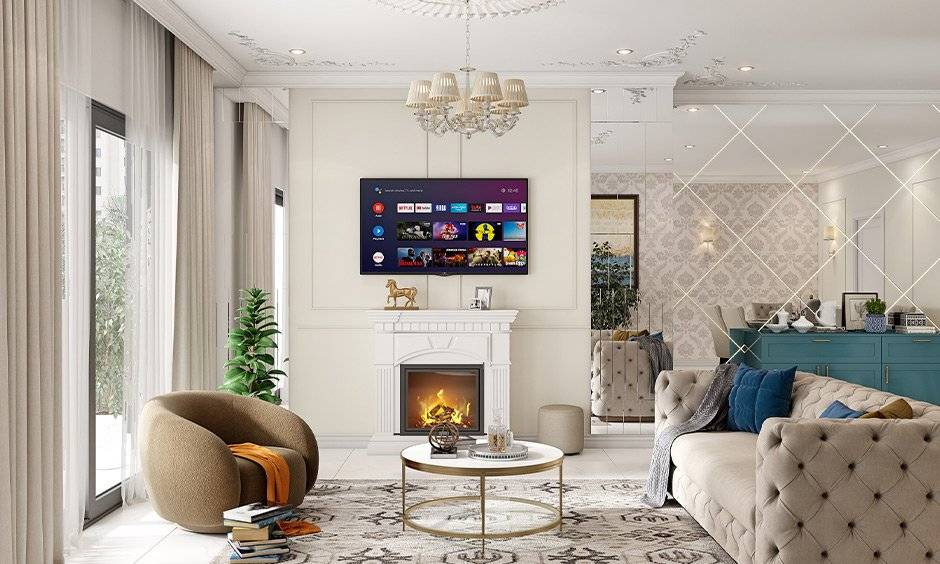
The television above the fireplace argument never dies because both sides have a point. Yes, it can throw off sightlines. Yes, it can also be the only practical choice in many family rooms. Pretending otherwise helps nobody. The trick is to make the decision honestly, then design around it with discipline.
If the television must sit above the fire, lower the mantel profile, keep the surround quieter, and avoid tiny decorative pieces that only create visual static. A frame television or dark screen treatment helps the wall stay calmer when the set is off. Better yet, build cabinetry or shelves nearby so the fireplace wall feels intentional rather than like a compromise you are trying to hide.
If you can place the television elsewhere, the fireplace gets to breathe as a true focal point. That creates a softer room, especially in comfortable family rooms where conversation matters as much as entertainment. But this is not a morality test. Families live differently. A design choice is only bad when it ignores how you actually use the room.
Materials decide whether the room feels timeless or tired
Style labels come and go. Farmhouse, modern rustic, quiet luxury, cottage clean, organic contemporary—half of them sound made up because they mostly are. Materials tell the truth faster. Put your energy there, and the room has a chance to stay handsome long after trend names stop sounding clever.
Use texture to make the hearth feel alive
Texture gives a fireplace soul. Flat surfaces can work, but they need tension from somewhere else or the wall dies on impact. Brick with worn edges, stone with soft variation, zellige tile with a slight ripple, plaster with hand-finished movement—those surfaces catch light in a way polished perfection never can. They look human. That matters.
The key is choosing one strong material voice and letting it speak clearly. A rough stone surround with glossy tile insets, ornate trim, mirrored accessories, and busy patterned drapes does not feel layered. It feels confused. Pick your lead note, then support it with quieter elements nearby. Rooms, like people, get more interesting when they stop trying so hard.
A small but memorable example comes from renovated postwar homes where builders often left plain brick fireplaces sitting like red blocks in otherwise updated rooms. Instead of covering them with trendy tile, some homeowners simply limewash the brick, deepen the mantel wood tone, and repaint the surrounding walls in a warmer neutral. Suddenly the hearth looks intentional. Simple moves. Big payoff.
Mix old and new so it feels personal
The best rooms rarely look bought in one afternoon. They look gathered. A fireplace helps you pull that off because it naturally invites contrast. A sleek firebox under a reclaimed beam. Smooth plaster paired with an antique brass screen. Crisp built-ins flanking a weathered brick surround. That friction creates personality.
You do not need a historic house to borrow history. Vintage fireplace tools, a timeworn mirror, old pottery, or a salvaged mantel can add memory to a newer room without making it feel themed. The danger lies in turning the fireplace into a costume drama. One or two pieces with age go a long way. More than that, and the room starts acting.
This is where taste gets real. The room should say something about you, not about a trend forecast. When you save ideas, save the ones that make you feel slightly relieved, slightly jealous, and a little more at home. That reaction is worth more than a hundred polished photos. Great fireplace inspiration should stir recognition, not just admiration.
Style the area for family life, not showroom life
A family room has to survive real use. Blankets end up crumpled. Books stack sideways. Someone drags in snacks. Someone forgets to put the basket back. Good styling plans for that mess instead of pretending it will never happen. The fireplace zone should still look inviting after Tuesday, not only after a fifteen-minute cleanup sprint.
Keep the hearth useful through every season
The smartest fireplace styling works in July as well as January. When the fire is off, the hearth should still earn its place. That may mean a woven basket of throws, low branches in a heavy vase, a simple screen, stacked logs, or a single large object in the firebox if it is nonworking. Seasonal décor can be lovely, but it should not take over your personality.
You want the mantel to shift lightly, not lurch into costume. A few evergreen stems in winter, a bowl of moss or citrus in spring, dry grasses in autumn—small moves keep the room awake without turning the hearth into a holiday craft corner. The room should still know who it is when the decorations leave.
One smart source of ideas for evolving your design language is this collection of <a href=”https://prnetwork.io/”>family room styling inspiration</a>, especially when you are trying to connect comfort with cleaner visual choices. Borrow the lesson, not the whole script. Your house deserves that respect.
Create seating that invites people to stay
A fireplace can be beautiful and still fail the room if the seating around it feels awkward. Chairs angled too sharply can feel formal. A sofa parked miles away breaks the intimacy. Everything pushed flat against the walls leaves the center of the room emotionally empty. The cure is not complicated, but it does require nerve. Pull the furniture in.
Start by building a conversation zone first and a circulation path second. People should be able to face the fire without twisting their necks or shouting across a coffee table the size of a canoe. A pair of swivel chairs often works magic because they let people turn toward the flames, the television, or each other without the room feeling stiff.
The best layouts also leave space for the floor to matter. Family rooms need a little openness so kids can stretch out, pets can sprawl, and the room can breathe between furniture pieces. A fireplace should create closeness, not crowding. That distinction decides whether the room feels gracious or merely full.
The strongest family rooms feel edited, not empty
By the time you reach the final decisions, the temptation is to add one more shelf item, one more pillow, one more decorative flourish near the hearth. Resist it. Family rooms thrive on warmth, but warmth is not clutter. It is care, rhythm, and enough breathing room for the best elements to do their job.
Know what to leave out
Restraint rarely gets the credit it deserves because it is harder to photograph than excess. Yet the rooms people love most usually share one trait: they are missing the unnecessary. The fireplace does not need oversized lettering, tiny lanterns, fake plants, or a mantel that changes identity every month. It needs clarity.
That does not mean the space should feel stripped or severe. It means every object near the hearth should have a reason to exist. Maybe it brings scale. Maybe it softens a hard line. Maybe it carries memory. Maybe it adds quiet color. If it does none of those things, it is probably just making the room noisier.
Editing also makes a room easier to maintain, and that matters more than many design articles admit. A beautiful fireplace area that takes twenty minutes to tidy will slowly become a frustrating one. Design should lighten your life a little. If it adds chores without adding comfort, that is not style. That is nonsense.
Make the room feel finished over time
Some fireplaces come together fast. Most should not. A family room grows better when you leave space for the second layer to arrive naturally. Live with the surround before buying mantel decor. Test lamp placement before drilling for sconces. See how evening light hits the wall before choosing paint. Rushed rooms often look expensive and oddly empty.
The most convincing finish comes from patience. Maybe you add a vintage stool six months later because you finally found one with the right shape. Maybe the perfect art piece arrives after you stop hunting. Maybe you realize the room needed darker drapery panels, not more accessories. Good homes teach you what they want if you stop interrupting them.
That is the real reward of thoughtful fireplace inspiration. It gives you direction without trapping you in imitation. Your family room should end up feeling like the truest version of your household—warm, useful, forgiving, and a little more beautiful than it strictly needed to be. That is the sweet spot. And it is worth waiting for.
Conclusion
The fireplace in a family room should do more than sit there looking respectable. It should shape the mood, steady the layout, and make ordinary evenings feel a touch more generous. That kind of design is not about showing off. It is about building a room people actually want to return to, again and again, without being told.
The strongest choices usually come from honesty. You choose materials that age well, seating that invites people in, and styling that can survive real life. You stop chasing perfection and start chasing belonging. That shift changes everything. A room becomes warmer when it reflects the people inside it instead of trying to impress strangers.
The best fireplace inspiration does exactly that. It helps you see beyond trend noise and toward a space that feels calm, grounded, and unmistakably yours. If your family room still feels unsettled, start with the hearth and work outward. Edit harder. Warm the palette. Pull the chairs closer. Then live with it long enough to let the room answer back. Your next step is simple: pick one fireplace detail to change this week, and make the room feel more like home on purpose.
FAQ 1: What is the best fireplace style for a busy family room?
The best style is one that can handle daily life without looking fragile. Think textured finishes, warm colors, and simple lines. Skip anything too precious. A family room fireplace should welcome kids, guests, pets, and clutter without losing its charm.
FAQ 2: How do I decorate a fireplace mantel without making it look crowded?
Start with one large anchor piece, then add one or two supporting objects with different heights. Leave blank space. That empty area is doing work. A crowded mantel feels nervous, while a calm one makes the whole room look more settled.
FAQ 3: Should a TV go above the fireplace in a family room?
It can, but only when the layout leaves you few better options. Keep the mantel low, the decor restrained, and the wall visually quiet. When done with care, a TV above the fireplace can feel practical rather than like a design surrender.
FAQ 4: Which fireplace materials work best in warm and cozy family rooms?
Brick, plaster, limewash, natural stone, and warm-toned wood usually work beautifully because they carry texture and depth. These materials catch soft light well and age with grace. Glossy finishes often feel colder, which is the opposite of what family rooms need.
FAQ 5: How can I make an old fireplace look more current without replacing it?
Paint or limewash the surround, swap the mantel, update the screen, and restyle the hearth with fewer objects. Small changes often go far. You do not need a full rebuild when the bones are solid and the proportions already work.
FAQ 6: What colors make a fireplace feel warmer in a family room?
Cream, clay, mushroom, soft taupe, muted green, and rich brown usually feel warmer than bright white or sharp gray. The trick is choosing shades with depth. A fireplace should soften the room, not light it up like a kitchen backsplash.
FAQ 7: How do I arrange furniture around a fireplace for better conversation?
Pull seating inward so people can face each other and the fire without strain. Use chairs that can pivot when possible. Leave enough open floor space for movement. A good layout feels close and easy, never cramped or stiffly symmetrical.
FAQ 8: Why does my fireplace area still feel unfinished after decorating it?
Most unfinished fireplace areas suffer from one of three problems: weak proportions, too many small objects, or the wrong furniture placement. Strip back the extras first. Then check scale and flow. Rooms usually improve faster through editing than through more shopping.