

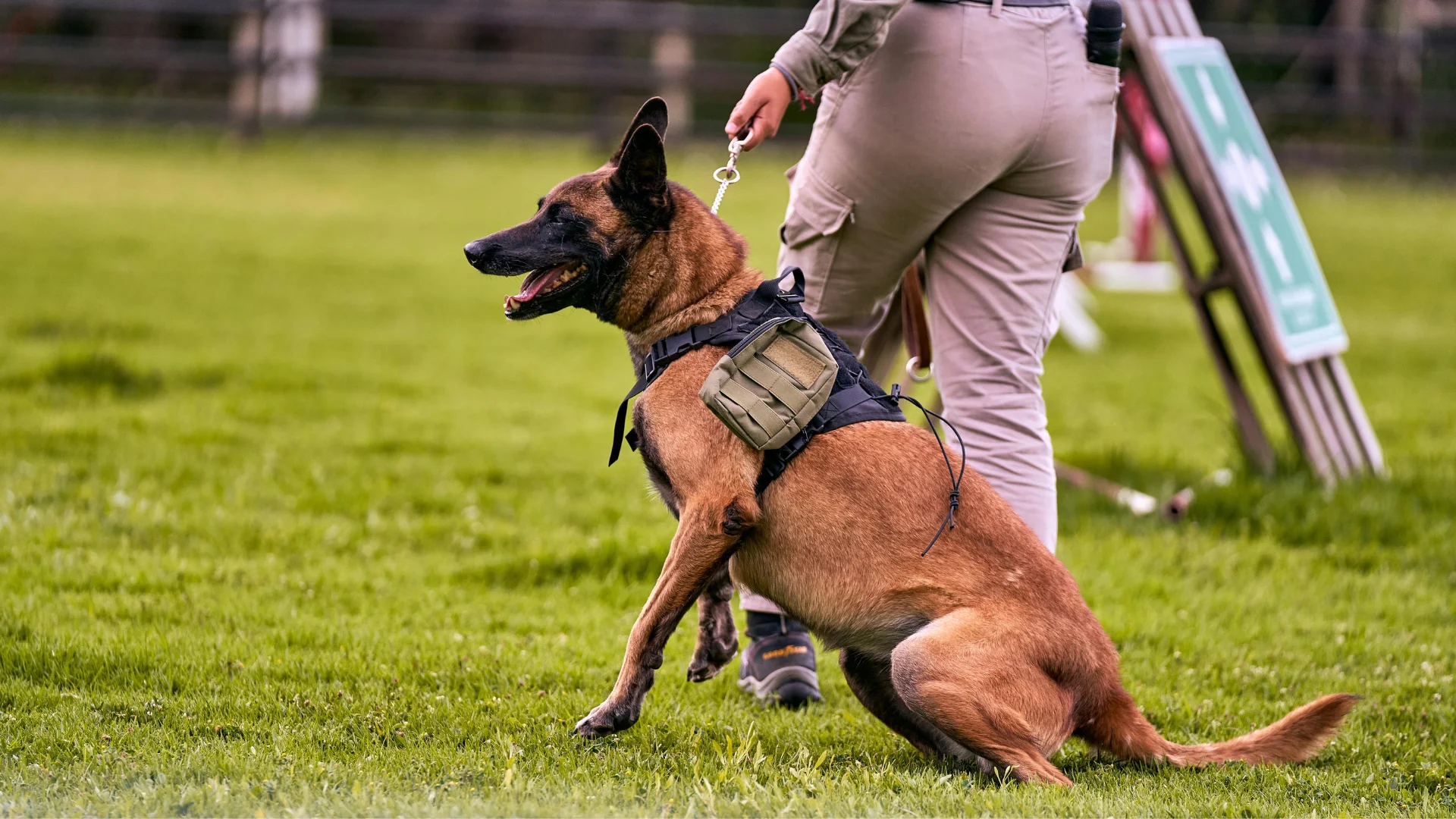
Dog training programs should do more than teach a dog to sit, stay, or come when called. Effective training helps dogs understand expectations and respond appropriately when distractions, new environments, people, or other animals are present. The best approach also teaches owners how to maintain those behaviors in everyday life.
Whether you have a new puppy, an energetic adult dog, or a companion struggling with leash pulling or reactivity, choosing the right training structure can make a meaningful difference. Rob’s Dog Training provides professional guidance designed to address individual behavior needs while helping owners build reliable skills for everyday situations.
What Makes Dog Training Programs Effective?
A dog may know a command in a quiet room and still ignore it at a busy park. This is one reason effective dog training programs should focus on more than memorizing commands.
Dogs need opportunities to practice obedience in different environments and around realistic distractions. Training should gradually teach them to listen when something more interesting is happening nearby.
A strong program typically addresses:
- Basic obedience and reliable response to commands
- Leash manners and walking skills
- Recall and coming when called
- Calm behavior around distractions
- Appropriate greetings
- Impulse control and focus
- Problem behaviors such as jumping, barking, or pulling
- Owner communication and consistency
The goal is practical obedience that carries over into daily routines rather than behavior that only appears during a formal lesson.
Choosing the Right Dog Training Program
Not every dog needs the same type of instruction. Age, temperament, previous experiences, behavior challenges, household routines, and owner availability can all affect which training format makes the most sense.
Before selecting a program, consider these questions:
- What behavior needs to change?
Identify the situations that create the most difficulty. It could be pulling on walks, ignoring recall, jumping on guests, barking, anxiety, or difficulty settling. - Where does your dog struggle?
A dog that listens at home but becomes distracted outdoors may need more real-world exposure rather than simply more repetition indoors. - How involved do you want to be?
Some owners prefer hands-on instruction, while others have demanding schedules and want professional trainers to handle more of the daily training. - How will the behavior be maintained?
Training does not end when a lesson or boarding period finishes. Owners need clear guidance on how to reinforce appropriate behavior afterward.
Answering these questions can help narrow down the most suitable training format.
Private Dog Training Lessons for Hands-On Owners
Private lessons can be a practical choice for owners who want to participate directly in their dog’s education. Instead of watching someone else train the dog, the owner works alongside a professional trainer and learns how to communicate effectively.
This can be especially useful when the owner needs help understanding why a dog is pulling, ignoring commands, jumping, or becoming distracted.
Rob’s Dogs offers private lessons customized around the dog’s needs and the owner’s goals. The company states that its private training focuses on both training dogs and teaching owners, with lessons designed to give owners methods they can use between sessions.
That owner involvement matters because consistency is a major part of long-term behavior.
If one person allows a dog to jump on visitors while another consistently prevents it, the dog receives mixed information. Clear household expectations make it easier for the dog to understand which behaviors are appropriate.
Board and Train for Immersive Training
Board and train programs provide a different approach. Instead of attending individual lessons with their owners, dogs stay with professional trainers for an extended period and receive structured training throughout their stay.
This format may appeal to owners with busy schedules or dogs that benefit from consistent daily instruction.
According to Rob’s Dogs, its Board & Train program allows dogs to stay at its K9 Performance Center and receive immersive training focused on obedience, manners, and behavior correction. Owners are also guided through how to maintain the results after their dogs return home.
A board and train program should not be viewed as a shortcut that eliminates the owner’s responsibility. The transition home is important. Dogs need continued reinforcement so the behaviors learned during training become part of their normal routine.
That is why owner education and follow-through should be considered when evaluating any board and train option.
Real-World Practice Matters
One of the most overlooked aspects of dog training is context.
A dog may perform a perfect “stay” in the living room but struggle when another dog walks past. A dog may walk nicely around the house but pull toward every smell on a neighborhood walk.
Real-world distractions change the difficulty of a behavior.
Rob’s Dogs notes that its private lessons are conducted in public environments such as parks and shopping centers, helping dogs practice obedience around distractions.
This type of practice can help bridge the gap between controlled training and everyday life.
When selecting dog training programs, ask whether training includes opportunities to work around realistic distractions. The answer can tell you a great deal about whether the program is designed for practical obedience.
Behavioral Assessment Should Come First
Before deciding exactly what a dog needs, it is useful to understand the behavior itself.
A behavioral assessment can help identify what is happening, when it happens, and what factors may contribute to the issue. A dog that appears stubborn may actually be distracted, confused, overstimulated, fearful, or responding to an inconsistent routine.
Rob’s Dogs begins its process with an in-person behavioral assessment or a call to discuss the owner’s goals. Its assessment process includes observing the dog, identifying contributing factors, explaining the behavior, and outlining a training plan based on the dog’s needs.
This individualized approach is valuable because training should address the actual problem rather than simply applying the same routine to every dog.
Consistency Is What Makes Training Stick
Even the best dog training programs require reinforcement after formal instruction ends.
Owners can support progress by making training part of everyday routines. Instead of treating obedience as a separate activity, use opportunities throughout the day to reinforce appropriate behavior.
For example:
- Ask for a calm sit before opening the door.
- Practice recall in safe, controlled environments.
- Reward calm behavior when guests arrive.
- Reinforce loose-leash walking during regular outings.
- Keep commands and household rules consistent.
- Gradually increase distractions as your dog improves.
Short, consistent practice can be more useful than occasional sessions that are disconnected from daily life.
Training Should Match the Dog, Not Just the Breed
Breed characteristics can provide useful context, but they should never be the only factor used to determine a training plan.
Two dogs of the same breed can have completely different personalities, histories, energy levels, confidence, and behavioral challenges. One may need help with impulse control, while another may need support with leash behavior or anxiety.
This is why personalized dog training programs can be more practical than generic routines. Training should account for the individual dog and the situations the owner actually needs to manage.
How to Get Better Results From Training
Owners can make professional training more effective by taking an active role in the process.
1. Define specific goals
Instead of saying, “I want a better-behaved dog,” identify measurable outcomes. You might want your dog to walk without pulling, come when called, remain calm around visitors, or settle inside the home.
2. Identify difficult situations
Write down when the problem occurs. Note the location, people, animals, sounds, or activities that seem to trigger the behavior.
3. Practice consistently
Follow the trainer’s recommendations between sessions. Sporadic reinforcement can make it harder for a dog to understand expectations.
4. Increase distractions gradually
Do not assume that mastering a behavior in a quiet environment means your dog is ready to perform it anywhere. Increase difficulty step by step.
5. Maintain the training
Continue reinforcing appropriate behavior after formal training ends. Long-term reliability comes from repetition and consistency.
Finding Dog Training Programs That Fit Your Goals
The right dog training program is not necessarily the one with the longest schedule or the most commands. It is the one that addresses your dog’s specific needs and helps you create reliable behavior in the situations you actually experience.
Look for professional guidance that considers your dog’s behavior, provides practical instruction, and explains how you can maintain progress at home. Whether you choose private lessons or an immersive board and train format, the focus should remain on clear communication, appropriate behavior, and real-world reliability.
Rob’s Dogs offers private lessons and Board & Train options, with its training process centered on personalized instruction and practical results. Owners can begin by discussing their goals through a call or behavioral assessment before determining which option is appropriate.
For owners ready to take the next step, visit Rob’s Dogs to learn more about available dog training programs and determine which approach may be the right fit for your dog.